

PROGRAM IN
Cellular & Molecular Medicine
About PCMM
The Program in Cellular and Molecular Medicine (PCMM) is a multidisciplinary research program based at Boston Children’s Hospital. Our 15 distinguished faculty are dedicated to full-time research and training and hold academic appointments at Harvard Medical School. The members of our Scientific Advisory Board provide their insight to the faculty and meet with the members of PCMM at our annual scientific retreat.
Primary Areas of Research
Adhesion molecules and inflammation
Autoimmunity and allergy
Genetics of immunodeficiency and cancer
Immune defenses against infectious diseases, viruses, and tumors
National Academy Members and HHMI Investigators
6 Members
Frederick W. Alt, PhD
Taekjip Ha, PhD
Judy Lieberman, PhD, MD
Timothy A. Springer, PhD
Hao Wu, PhD
Yi Zhang, PhD
7 Members
Frederick W. Alt, PhD
Taekjip Ha, PhD
Sun Hur, PhD
Tomas Kirchhausen, PhD
Judy Lieberman, PhD, MD
Hao Wu, PhD
Timothy A. Springer, PhD

7 Members
Frederick W. Alt, PhD
Taekjip Ha, PhD
Sun Hur, PhD
Judy Lieberman, PhD, MD
Timothy A. Springer, PhD
Hao Wu, PhD
Yi Zhang, PhD
4 Members
Frederick W. Alt, PhD
Taekjip Ha, PhD
Sun Hur, PhD
Yi Zhang, PhD
Seven Decades of Discovery
Today, PCMM brings together investigators across immunology, hematology, cancer biology, microbiology, neuroimmunology, genomics, structural biology, quantitative biology, and technology development. What unites these diverse fields is a shared commitment to uncovering the molecular and cellular mechanisms of human biology and translating that knowledge into new ways to understand, diagnose, and treat disease. This breadth represents not a departure from PCMM’s origins, but their natural evolution. From the early fractionation of blood and the development of lifesaving therapies to modern studies of immune regulation, genome maintenance, cellular organization, and disease mechanisms, PCMM has continually expanded its scientific approaches while preserving its central mission: to pursue fundamental discovery in ways that improve human health. The history that follows explains how this interdisciplinary community came to be.
These are some of the milestones and key figures along the way.
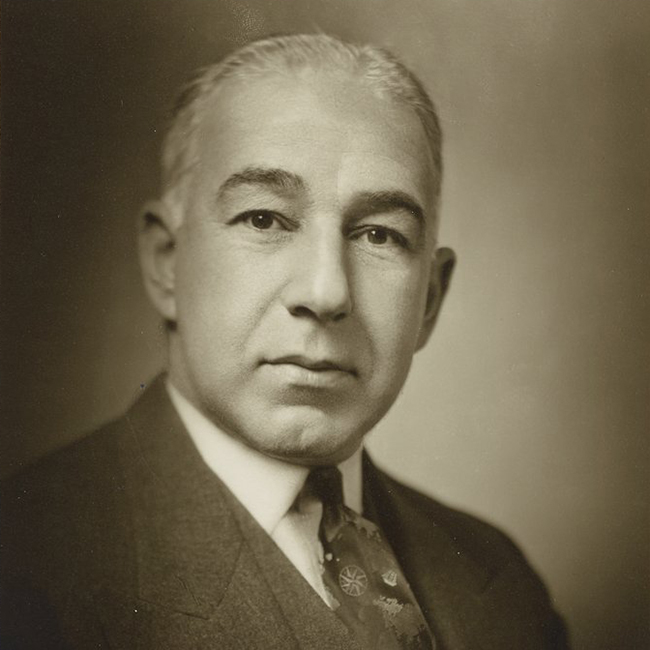
Edwin Joseph Cohn, PhD
(1892 – 1953)
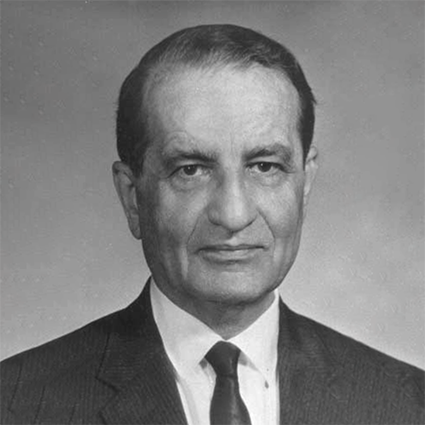
Louis Klein Diamond, MD
(1902 – 1999)
ORIGINS: The Protein Foundation and Blood Research Institute
(1953-1972)
The Protein Foundation, founded by E. J. Cohn, PhD in 1953, is the original forerunner of PCMM.
Edwin Joseph Cohn, Professor of Physical Chemistry at Harvard Medical School, was a protein scientist whose method for fractionating blood into its constituent parts provided critical new therapies for military medicine. In 1940, he was commissioned by the US Military to develop a stable albumin solution to treat blood/plasma loss from battlefield injury. Cohn’s fractionation methods saved the lives of thousands of soldiers during World War II, and spawned a postwar industry in plasma for civilian use. His research contributed to the expansion of the field of hematology after the war.
Much celebrated in the media (Life Magazine, McCall’s, Collier’s, The Atlantic), Cohn was listed among ‘The 100 Most Important People in the World Today’ in 1952.
He was Chair of the Division of Medical Sciences at Harvard from 1936-1949, and was the first Harvard Professor from the natural sciences named University Professor. In 1949, Cohn established the independent Blood Characterization and Preservation Laboratory in Jamaica Plain, Massachusetts. He founded the Protein Foundation in 1953, the final year of his life. There, his work was carried forward by the investigators he had mentored.
At about the time that EJ Cohen was working on blood fractionation at Harvard Medical School, a pediatrician just down the block was breaking ground in the field of hematology.
In 1942, Louis K. Diamond, MD established the Blood Grouping Laboratory (BGL) at Boston Children’s Hospital, one of the world’s first pediatric hematology research laboratories. It was the first facility to routinely type the blood of pregnant women, to detect potential problems in their newborns related to blood-type incompatibility.
His many accomplishments include the creation of a revolutionary treatment for Rh disease in newborns and, together with Sydney Farber, MD, successfully applying one of the first chemotherapies in 1948 – to treat childhood acute lymphocytic leukemia. Other contributions include the discoveries of Diamond-Blackfan Anemia, Gardner-Diamond Syndrome, and Schwachman-Diamond Syndrome. He also directed the American Red Cross’s National Blood Program from 1948 to 1950 and helped establish more than 35 regional blood banks. Dr. Diamond received several awards during his lifetime, including the Mead Johnson Award from the American Academy of Pediatrics in 1946 and the Theodore Roosevelt Medal for Distinguished Public Service in Science in 1964.
In 1972 Diamond’s BGL group merged with the Protein Foundation’s Blood Research Institute to become the Center for Blood Research (CBR). Diamond served at CBR as Vice President.
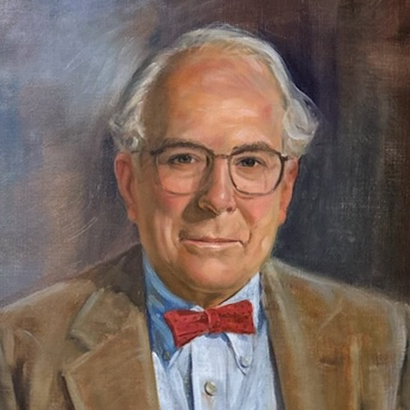
Douglas Surgenor, PhD
(1918 – 2001)
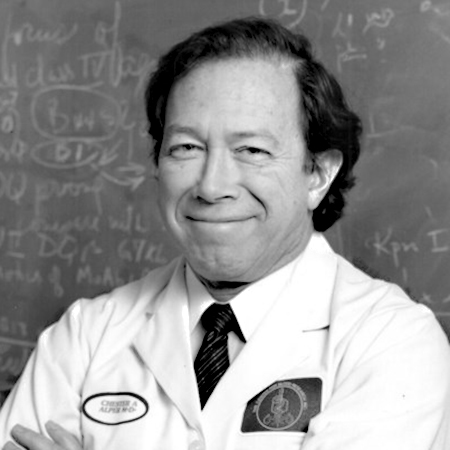
Chester Alper, MD
(1931 – 2024)
Center For Blood Research
(1972-2012)
The Center for Blood Research (CBR) (renamed the Immune Disease Institute in 2007, reflecting the broader scope of the science at the time) operated as an independent nonprofit focused on molecular medical research for some 60 years until 2012, when it merged into Boston Children’s Hospital.
Douglas Surgenor, PhD was CBR’s President from 1972 to 1987. His ties to the field went back to his collaboration with EJ Cohn and the ground-breaking studies of blood chemistry and fractionation in the 1940s.
Chester Alper, MD served as CBR’s Medical Director from 1972 to 1993. Professor of Pediatrics at Harvard Medical School since 1975, Alper pioneered in the study of the human complement system, and the human genetics associated with immune response and autoimmune diseases. He led Harvard’s Blood Grouping Laboratory as Scientific Director beginning in 1971 and continued in that role through the merger with the Center For Blood Research, until 1994. Later, as Senior Investigator at the Program in Cellular and Molecular Medicine, he focused his research on the genetics of Type 1 diabetes and the genomics of the human major histocompatibility complex.
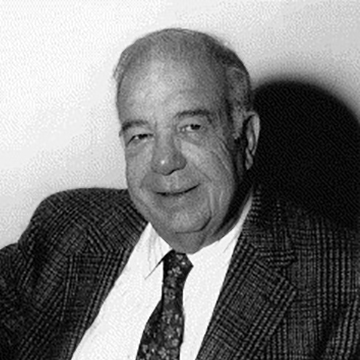
Fred S. Rosen, MD
(1930 – 2005)
Immunology Takes Center Stage
Fred Saul Rosen, MD was a world leader in pediatric immunology at Harvard Medical School and Boston Children’s Hospital. He headed the Division of Immunology at BCH from 1968 to 1985. Rosen was respected globally for his scientific accomplishments and revered as a dedicated physician and mentor to hundreds. Among his achievements, Rosen is responsible for the development of bone marrow transplantation, as well as the use of intravenous gamma globulin therapy to treat primary immunodeficiencies in children.
In 1987, Rosen, became the president of CBR. Under his leadership, the spotlight of inquiry at the Center turned fully to highlight immunology and the Center became a world-class laboratory.
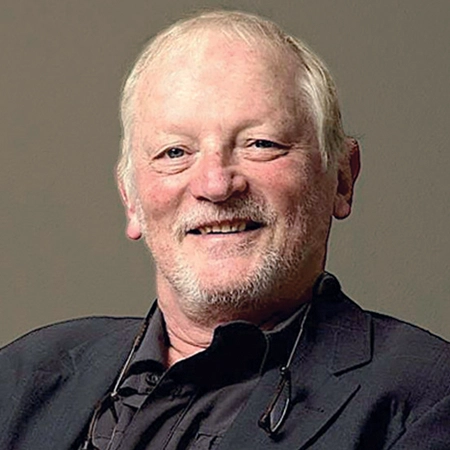
Frederick W. Alt, PhD
Director Emeritus/Associate Director, PCMM
Investigator, Howard Hughes Medical Institute
Charles A. Janeway Professor of Pediatrics, BCH
Professor of Genetics, Harvard Medical School
The 21st Century
Geneticist and cancer biologist, Fred Alt, PhD, joined the Center for Blood Research as Scientific Director in 2005 and became its President in 2010 and led it through two decades of expansion and development.
In 2007, CBR took the name Immune Disease Institute (IDI) as a reflection of the field’s broadened scope. In 2012, Alt led the merger of IDI with Boston Children’s Hospital where it was named the Program in Cellular and Molecular Medicine (PCMM). Alt served as Director of PCMM until January of 2025 and continues as Director Emeritus and Associate Director.
Dr. Alt has made major discoveries on recombination in the immune system, the mechanisms of blood cancer development, and antibody-based vaccine development.
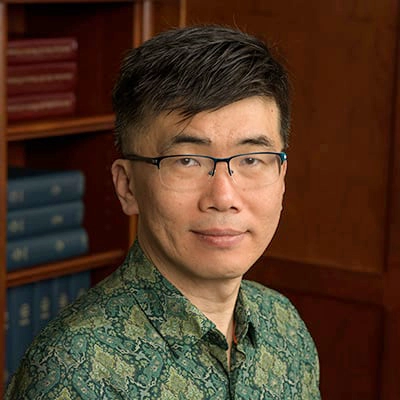
Taekjip Ha, PhD
George D. Yancopoulos Professor of Pediatrics in honor of Frederick W. Alt, HMS and BCH Investigator of Howard Hughes Medical Institute
PCMM Today
In 2025, biophysicist Taekjip Ha, PhD took the helm at PCMM as its Director and Senior Investigator. Dr. Ha studies the biophysics of genomic caretakers at a single-molecule resolution, offering insight into crucial biological processes at play in normal and pathological conditions, like cancer. His lab also develops new techniques to visualize biological processes.
Dr. Ha’s research reflects the increasingly interdisciplinary nature of modern biomedical science, integrating biophysics, genomics, and technology development.
1965. CENTER FOR BLOOD RESEARCH
PCMM Discoveries
From the beginning, PCMM and its predecessors have addressed key biological questions and contributed to the understanding of disease. This work produced innovative methods, novel devices and breakthrough treatments making a broad impact on human health and well-being. Read more about the therapies and technologies that have been conceived in our labs.