

PCMM News
Rejuvenating effects of interleukin-4 on blood stem cells
The processes of aging and chronic inflammation exhibit an imbalance in blood cell populations, leading to an expansion of myeloid cells (neutrophils and monocytes) while decreasing lymphoid cells (B cells and T cells). This, in turn, can further increase the levels of pro-inflammatory cytokines, driving a feed-forward loop and contributing to systemic dysfunction across multiple tissues.
In a recent Immunity cover story publication, Jingfei Yao (first author) and Yuting Wang from the Zhang lab have identified the cytokine inter-leukin –4 (IL-4) as a signaling molecule that can restore the balance of lymphoid and myeloid cell populations, in turn resulting in positive systemic effects. Additionally, they further elucidated the underlying molecular mechanism.
For the initial screen, they tested a set of known pro- and anti-inflammatory cyto-kines in vitro. Only IL-4 resulted in inhibition of the myeloid differentiation. Additionally, they identified the particular blood cell populations responsive to IL-4: IL-4 promoted the transition of MPP2 and MPP3 cells toward the lymphoid-biased MPP4 state (Figure 1).
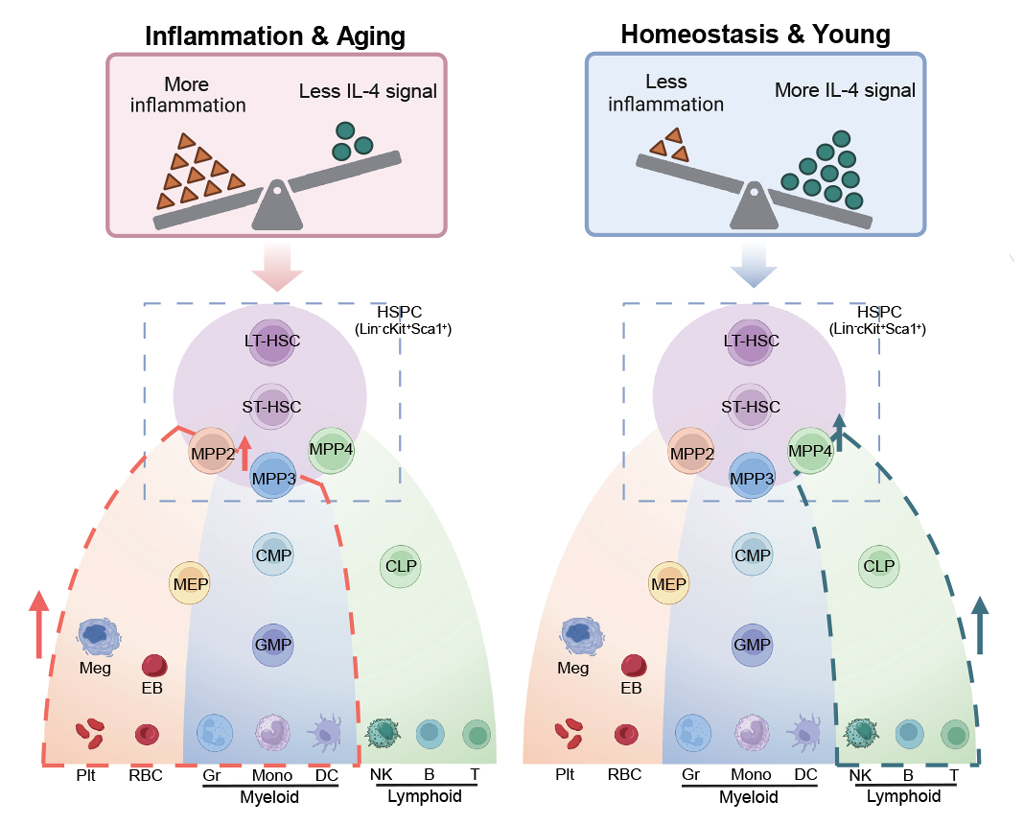
Figure 1. The balance of the myeloid and lymphoid lineages during different condi-tions. A) IL-4 signaling shifts hematopoiesis toward lymphoid output under homeo-static conditions. B) The hematopoietic cell hierarchy: long-term hematopoietic stem cells (LT-HSCs) differentiate into short-term HSCs (ST-HSCs), which then differ-entiate into lineage-restricted multipotent progenitors (MPP) 2, 3 and 4, which give rise to different cell lineages. Image: courtesy of Jingfei Yao.
In addition, the authors have shown the signaling mechanism to be via the FLT3-STAT6 pathway (Figure 2). This was demonstrated both in vitro with STAT6 pathway inhibitors, as well as in vivo using STAT6 KO mice.
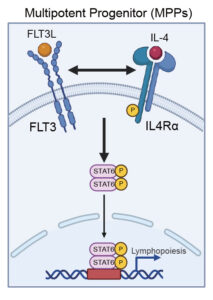
Figure 2. The IL4-FLT3-STAT6 axis is responsible for increased lymphopoiesis in MPP4 cells. The FLT3 receptor is selectively expressed on MPP4 cells and potentiates the effects of IL-4, resulting in increased STAT6 signaling and activation of the downstream lymphopoiesis transcription program. Image: courtesy of Jingfei Yao.
Notably, IL-4 signaling was down-regulated in aged mice. Importantly, administration of IL-4 in mice with chronic inflammation and old age reversed the myeloid bias and restored B-cell and naïve T-cell production while reducing exhausted T cells, resulting in significantly improved overall systemic function (cognitive and muscle) and metabolic parameters.
Thus, IL-4 is a promising candidate for reversing age- and chronic inflammation-related myeloid bias and the accompanying negative systemic effects. How exactly IL-4 -mediated rebalancing of the lymphoid/myeloid cell populations affects different organs would be an interesting avenue to study. IL-4 can be a multifaceted therapeutic, since it could also be combined with immunotherapies to modulate them.
Despite its therapeutic promise, systemic IL-4 administration may carry potential risks because IL-4 is also involved in type 2 inflammation and has been implicated in tumor progression in certain contexts. Future strategies that enable targeted or transient delivery may maximize therapeutic benefits while minimizing adverse effects.
Jingfei concludes: “Our findings suggest that restoring lymphoid balance, rather than broadly suppressing inflammation, may represent a promising strategy to promote healthier immune aging.”