


Scientific Advisory Board
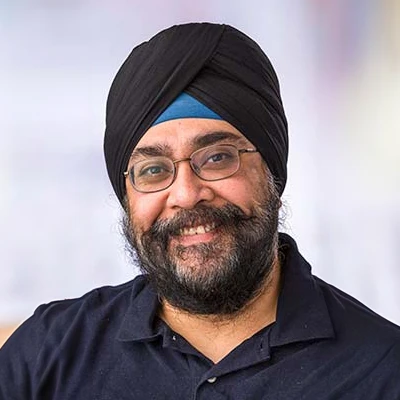
Harmit Malik, PhD
(ad hoc member)
Professor and Associate Director
Basic Sciences Division
Fred Hutchinson Cancer Research Center
Investigator, Howard Hughes Medical Institute
Harmit Malik, PhD
Harmit Malik got his Bachelors in Technology in Chemical Engineering at the Indian Institute of Technology, Mumbai, India. He then moved to the US to get his Ph.D. in Biology, at the University of Rochester, NY, under the mentorship of Prof. Thomas Eickbush, to work on the evolution of retrotransposable elements. In 1999, he moved to Seattle to the Fred Hutchinson Cancer Research Center (the “Hutch”), to do his postdoc with Dr. Steve Henikoff on the evolution of centromeres and centromeric proteins. In 2003, he started his own lab at the Hutch, where he has been ever since.
Dr. Malik studies genetic conflict, the competition between genes and proteins with opposing functions that drives evolutionary change. His research could have implications for a range of diseases, from HIV to cancer. As part of this work, his team developed an approach for identifying genes that divide one species from another, which could help solve the riddle of how new species evolve. Dr. Malik also studies the evolutionary processes that drive our body’s interactions with viruses, including contemporary scourges like HIV as well as ancient viruses whose fossils litter our genome. With Hutch colleagues, he has characterized the rapidly evolving interface between proteins on human cells and viruses that make us sick. This work has highlighted surprising deviations from “textbook” models of these interactions, and it is revealing gene variants that could influence our susceptibility to infection. (credits: fredhutch.org)
Dr. Malik was awarded the 2017 Eli Lilly Prize in Microbiology, the most prestigious prize awarded by the American Society of Microbiology. Harmit was elected to the National Academy of Sciences in 2019 and to the American Academy of Arts and Sciences in 2022. (credits: cancergrandchallenges.org)